Monday, May 10, 2010

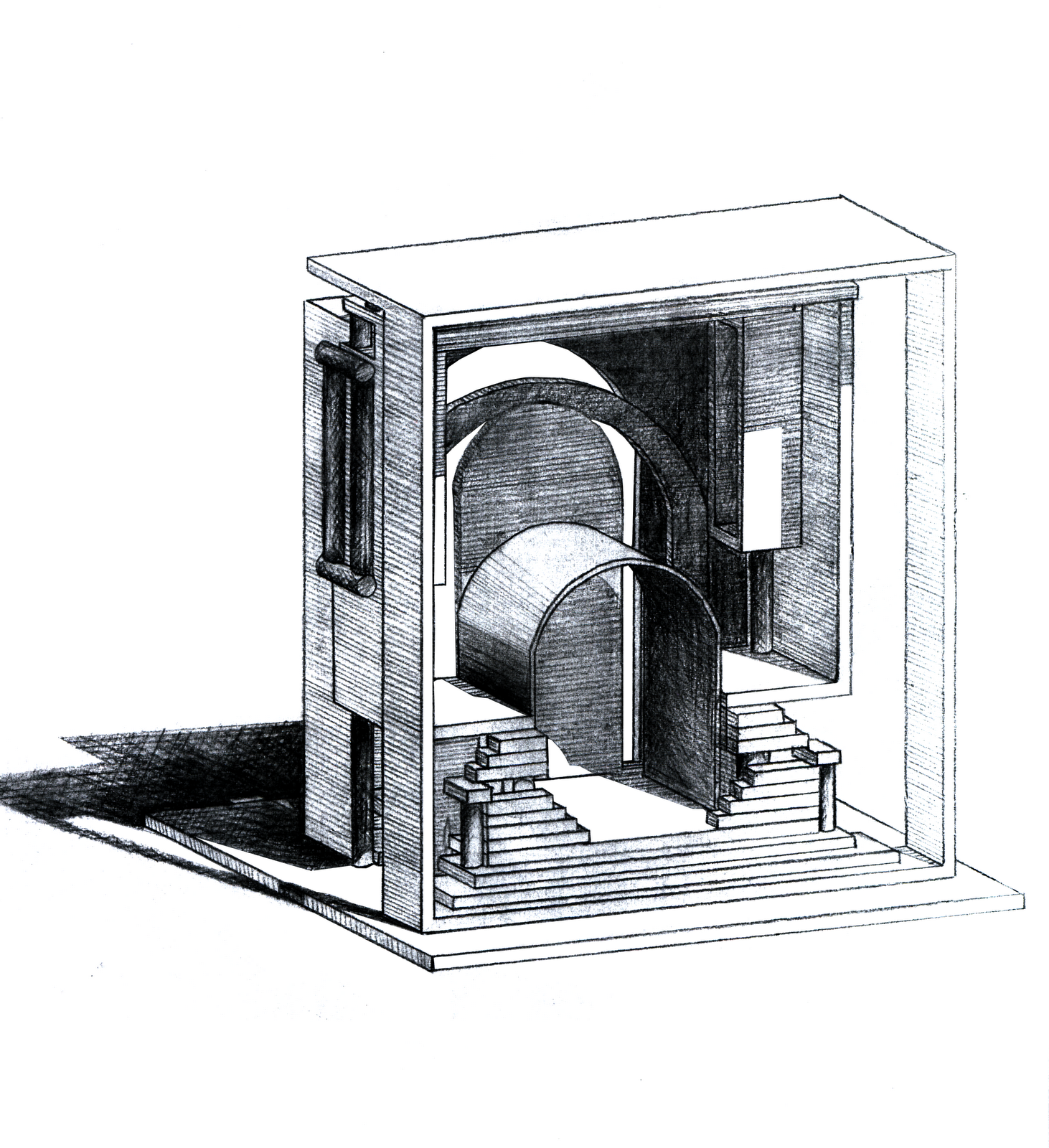
Hand drawings scale 1:100 (final)

FRONT ELEVATION


LEFT ELEVATION


PLAN


AXONOMETRIC DRAWING


My drawings are on tracing paper so they looked all blurry and low in contrast after being scanned. Plus, there were traces of pencil everywhere on the papers. So I had to edited by Photoshop to get this final result.

Computing drawings (draft)

I wanted my rendering to be accurate so I created a Sketchup model and used the program to drop shadows into my computing drawings. Then I traced the whole drawings on tracing papers with pencil and then shadowing by both pencils and charcoal.


Model scale 1:50 (final)


Saturday, May 1, 2010

Inspiration

Looking through images of good Cathedrals in the past, it came to my attention that their most common design are using high ceilings, domes and the principles of symmetry for both interior and exterior. Their floor plans were quite simple, usually using geometric shapes like squares, circles, triangles and rectangles.


Tadao Ando:

I think Tadao Ando is one of architects that master the use of light really well. Some of his churches' designs are outstanding with great lightning to emphasis well the holiness and ambiance for this types of buildings


Wednesday, April 14, 2010

Assignment 2: Emanuel de Witte - "The interior of a Protestant Catholic Church"


Painter: Emanuel de Witte
Year: 1669
Technique: Oil on 45x34cm panel
Location: Rijksmuseum, Amsterdam


Emanuel's life brief description:

Emanuel de Witte was a Dutch perspective painter. He had some paintings from other genres but his works mostly focused on architectural spaces and interiors. He had an unfortunate life with the death of his first wife, the arrest for thief of the second one and his daughter leading to financial difficulties and problems with his art dealer Joris de Wijs. His life ended with suicide.

The painting:

The painting was named "Interior of a Protestant Catholic Church". It was somewhat different from other works of 17th century Dutch artists or of Edward Hopper’s in the early 20th century because even thought it showed interior scene, it was the public space that was painted here.

Location of this painting was a Catholic church which is one of those sacred places where people come to practise their religions.The whole painting was in a golden honey tone with subtle contrast in lightness and darkness implying the time was evening to sunset when the sunlight is quite weak and feeble. It also contained quite a lot of ornamentation with details unclear. The subtle light beams falling down from big windows up high contributed to the ambiance and holiness of the place. Plus, the high ceiling together with big columns emphasized the grandness in comparison the the human scale.

As we can see from the painting, the space was occupied by churchgoers. There were people with their children and dogs chatting in the foreground. Further back was a nun standing in a relaxing manner. This implied that churches are not only sacred and divine but also peaceful and serene places where people can stay for social chit-chat before coming home after their prayer sessions.

Sunday, April 4, 2010

My Parti, Poche' submission

PARTI:

The concept of parti was quite confusing at first for me. After some discussions in class and looking at examples in books, I think parti pretty much means using architectural diagrams to explore significant aspects in which the building was built based on as well as recognizing the problems that the architect, in this case is Le Corbusier, dealt with during design process and appreciating the solutions that make up the success of one particular building.


POCHE:

I've done all the modelling and shading using Google Sketchup. Then images exported were edited by Photoshop to maximize the contrast and cleanliness. Walls and columns were blackened to show their thickness as well as making the interior more profound.


Section

I think the idea of "Promenade Architecturale" and how Le Corbusier organizing spaces in which private area and public area were separated by diagonal axes in plan are some of the most significant features in the design of Villa Savoye. That's why I chose this section since it cuts through both private rooms and the open terrace in level 1 of the building as well as showing clearly how the ramp looks in longitudinal aspect. As we can see in the my rendering, the lighting contrast is especially strong in the middle level where one third of it is filled with dark shade while the rest starting from the ramp is particularly light in color.


Plan: Ground level


Plan: Level 1


Plan: Top floor

Villa Savoye (Le Corbusier) - Group Model scale 1:100